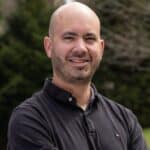
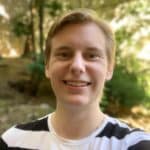
Writing and the Human Condition at the Woods College of Advancing Studies, William Hendel, and Instructor Kyleigh Leddy about developing this new interdisciplinary program in collaboration with CDIL.
CDIL chats with the Program Director of the M.A. in Writing and the Human Condition at the Woods College of Advancing Studies, William Hendel, and Instructor Kyleigh Leddy about developing this new interdisciplinary program in collaboration with CDIL. The MA in Writing and the Human Condition is a low-residency program that combines psychology, philosophy, and literature and the craft of storytelling.
Can you introduce Woods College’s new M.A. in Writing & the Human Condition? What makes this program unique?
Will: Currently, there are over 300 master’s-level writing programs in the United States, which is a lot, particularly when you realize that there are only about 200 medical schools and 198 accredited law schools in the country. So, the obvious question we were thinking about as we developed this program is, “Well, why another writing program? Why now?” We believe, generally speaking, that writing education at the graduate level only teaches half of what makes a great writer, with a focus mostly on the craft and the skill of composition. But in order to say something well, you first have to have something to say. This program starts from the neglected truism that all great writers are first and foremost great psychologists.
Kyleigh: It’s rare to get undivided attention and serious craft analysis of your work. One of the biggest benefits of a writing program like this is that you have a captive audience that comes with you as you experiment with your form and what you want to say. I hope that students who don’t know what they want to write about yet feel like they have the space to explore. And the students who feel like they have a really defined voice and idea of what they want to work on will hopefully allow themselves some flexibility, too. This is a safe space for us all to explore different ideas and be good literary citizens. That’s special.
Will: I would like our students to come away from the program with a new kind of confidence in their writing and to find their places in a conversation that’s been going on since Gilgamesh. I want students, by the end of the program, to have something that they can publish and that deserves to be distinguished in the world, but I also want them to feel like they are writers, and that they have voices other people would benefit from hearing.
Can you talk more about “the human condition” and being a “literary citizen?”
Kyleigh: About the human condition, we’re really talking about the psychology of the mind and what makes someone tick. We’re going to explore ideas around character, plot, and point of view. We’ll ask, “What are we really writing about here? How can we create characters that feel real? How can we play with experimental, interesting uses of perspective that get at the human experience?” By literary citizenship, I mean responding to each other’s writing and taking that work seriously. Being somebody who can critique and analyze a piece, not just in an academic sense, but to ask like an editor would, “What does this piece need to be stronger?” Students will leave as great readers as well as great writers, and that’s important to us.
Will: On the human condition, we’re in a kind of post-postmodern malaise where everything’s been done and said and talked about, and we’re trying to recover an appreciation of the strangeness and the humor of the human condition. We’re very interesting creatures, which have always inspired awe and wonder in the best writers. We’re trying to reignite that wonder in our students.
Where did the idea come from to combine psychological humanities and the craft of writing?
Will: It has been gestating for a very long time. A good friend of mine, Matt Clemente, helped Kyleigh and me design this program. He is the Director of Research and Curriculum at the Center for Psychological Humanities & Ethics at Woods College. Matt and I went to College of the Holy Cross together as undergraduates. We were both passionate English majors with designs on creating our own works of literature. But after we graduated, we felt that we still did not know enough to write anything worth reading. What we needed was a program that could train us in the kind of psychological insight that distinguishes all great writers. We never found it, and we ended up becoming traditionally trained academics, but in the meantime, we were able to develop something very much like what we were looking for all those years ago. The program we’ve built together is dedicated to the kind of clear-eyed self-knowledge that rewards readers for the considerable effort involved in trying to decipher a text. Officially, we’ve been working on it for at least two years, but we have been talking about it for probably ten years.
Then we were happy to meet Kyleigh, who joined us with all of her expertise in creative writing, and we were able to come up with something that is different but serves a need that I don’t know has ever really been met.
Kyleigh: I graduated from Boston College in 2019 with degrees in both English and Psychology. When I was applying for college, I wrote my admissions essay on wanting to design a program just like this someday that brought those two passions of mine together. I always wanted to be a writer, but, like many students, I didn’t think it was possible to really break into the industry. When I was a senior at BC, a creative writing professor of mine, the wonderful Suzanne Berne, suggested I submit an essay about grief to the New York Times’ Modern Love College Essay Contest. To my surprise and wonder, I won the contest and shortly after was offered a book deal with HarperCollins to expand the piece into a memoir. Since then, I’ve gone back to Columbia University to obtain my MSW and become a licensed therapist, received my MFA in fiction at Bennington Writing Seminars, and published two books–one non-fiction and one fiction. My third book, another novel, is forthcoming with Simon & Schuster next summer.
When I met David Goodman, Will, and Matt and learned about the Center for Psychological Humanities and Ethics, it felt like fate. This is the interdisciplinary program I always wished existed, and it’s been a real dream come true to help with the design. Our M.A. in Writing and The Human Condition directly aligns with my ethos as both an author and therapist; if you’re interested in the human mind, you’re interested in storytelling, and if you want to be a great storyteller, you need to first understand human psychology.
Can you say more about the modality of the program? Also, could you tell me a little bit more about the certificate option you offer?
Will: The program is a part-time, low-residency program with primarily asynchronous online coursework. We decided to make the coursework online and the program part-time because we wanted it to be available to as many students in as many different walks of life as possible. At the same time, we know that writing as an activity can be kind of isolating, and we didn’t want the modality to exacerbate that. In order to foster a sense of community, we decided to add weekly synchronous meetings on Zoom for fall and spring semesters. Each summer, we will also come together for an annual, four-day in-person retreat. Essentially,our students will have the flexibility of the asynchronous coursework, along with the ability to interact with professors and ask questions. They won’t be left in their silos to wrestle with their writing and these works by themselves.
In addition to the master’s degree, we have a certificate option, which is four classes instead of ten. Our goal with the certificate is to reach as many people who are interested in our vision of what creative writing can be as possible. Students who take courses as part of the certificate program can transfer that coursework to the master’s program if they decide to continue their studies.
What else would you like people to know about this program?
Will: I want people to know just the incredible amount of enthusiasm that we’ve had from the first time that we’ve pitched the program internally at Boston College and then when we began program recruitment. We have a phenomenal advisory board that’s stewarding us: Matt Clemente, Richard Kearney, Meg Kissinger, Claire Messud, Paul W. Morris, and James Wood. So, there is already an incredible amount of momentum that we’re taking into the fall that we’re very excited about.
How did working with CDIL impact the development of this program?
Will: I’ve been teaching at BC for about six years now, but almost all of that has been synchronous and in person. So, creating a largely asynchronous course has been very new for me, and CDIL has just been absolutely tremendous, from the layout of Canvas, creating a beautiful site, to thinking about assignments and finding the thing that would be most effective for people in an online modality. Also, reviewing my lectures and helping me improve them in the online format. CDIL has been outstanding, and I really appreciated the help.
Kyleigh: It’s been really helpful. We’re doing something that’s a bit experimental here. We’re taking a new approach and trying to make something accessible both online and in our synchronous sessions, so experimenting with our thinking about writing and discussion has been great.