
How Professor Conevery Valencius (History, MCAS) introduces students to what humanists can do outside the academy.
Over Summer 2025, the Career Center (CC) — in collaboration with the Center for Digital Innovation in Learning (CDIL) and the University Council on Teaching (UCT) — launched the Integrative Learning Faculty Grant, a new initiative designed to recognize and support faculty members who are interested in fostering integrative learning in their classrooms.
Why did you apply for this grant?
To bring in community members from outside BC, I need financial support for honorariums. To bring my students to other places, I need financial support for transportation. To build more awareness of career skills and reflective capacity about why we are all engaged in education, I need the help of insightful colleagues from other parts of the university.
What were you hoping to gain from your collaboration with CDIL and the CC?
I wanted to benefit from the insights of Career Center staff and our digital experts to create a course that would support humanities students in thinking not only about our subject matter, but about their trajectory after Boston College. I wanted to construct class experiences that would help people in my class build skills, confidence, vocabulary, and a sense of moral purpose in translating their work with us into their future jobs and careers. I’m very pleased that our collaboration has helped me do that!
What surprised you as part of this collaboration?
The wonderful openness and energy of partners at CDIL and at the Career Center. Our planning sessions offered un-rushed time to talk through ideas and classroom approaches with seasoned experts. That experience has enriched my course planning tremendously.
What’s your biggest takeaway from this collaboration?
Talking about careers isn’t the same as being careerist. If we humanists don’t talk with people in our classes about jobs and careers, then they’ll get muddled and less useful advice elsewhere. We can raise the intellectual level of conversations in our classrooms by helping people articulate their own career-related skills and abilities – and that can feed into the critical thinking that we want to foster about our subject matter, too.
How will you continue to develop your project moving forward?
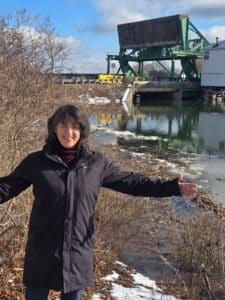
This course is part of a larger research project, a public history website called “Mapping the Neponset River’s History” that is hosted by the non-profit Neponset River Watershed Association. I hope and intend to use the digital and career resources we have developed in this Integrative Learning Grant not only to carry out an interesting and lively course this term and in future years, but to add depth to the reflections and career readiness to my work with graduate and undergraduate students working with me in my Neponset River Lab.
